Crossed Wires is a not-for-profit in Waterford that runs a live electronic music festival every St Brigid’s weekend. We’ve photographed and filmed their events for two years. This year we set them up with AI as a service, and used it to make the 2027 website and printed programme in under 10 days.
Built in
10 days
website, brochure and AI system
Website
3 views
flyers, crate and timetable
Tickets
On the site
Eventbrite checkout, no leaving the page
Brochure
24 pages
built in InDesign by AI, checked by us
Set up by AI
27
11 ticket listings and 16 QR codes
Website, printed programme and AI system for the 2027 festival.
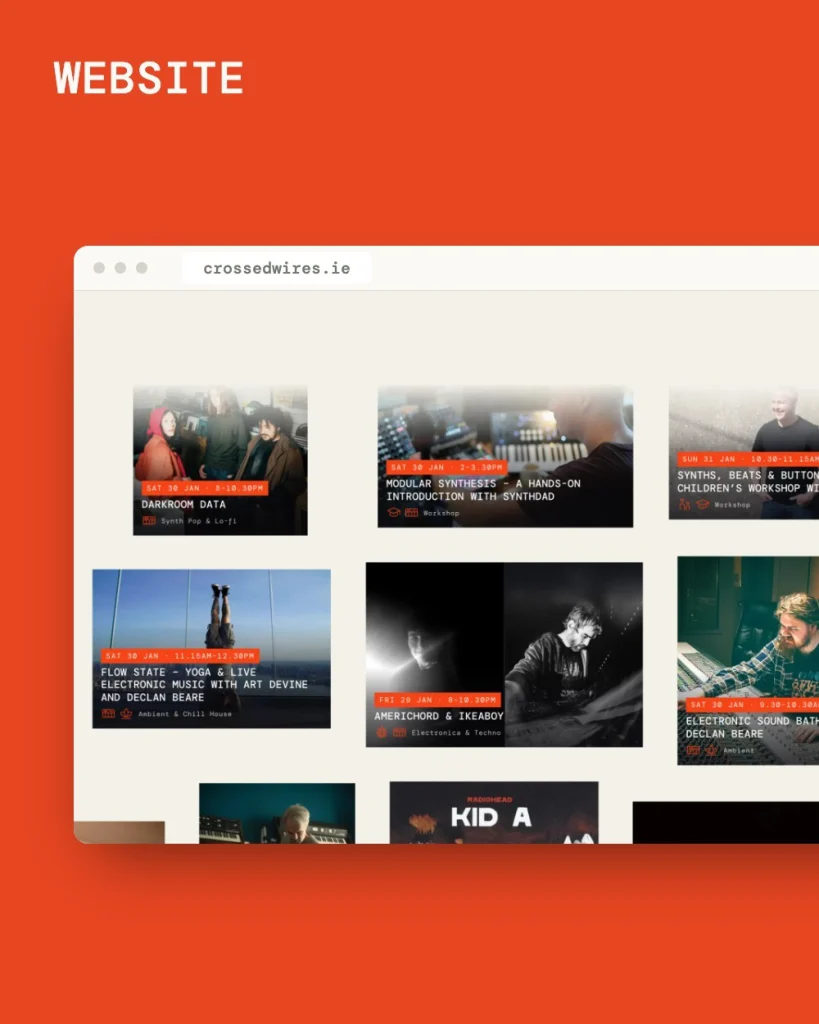
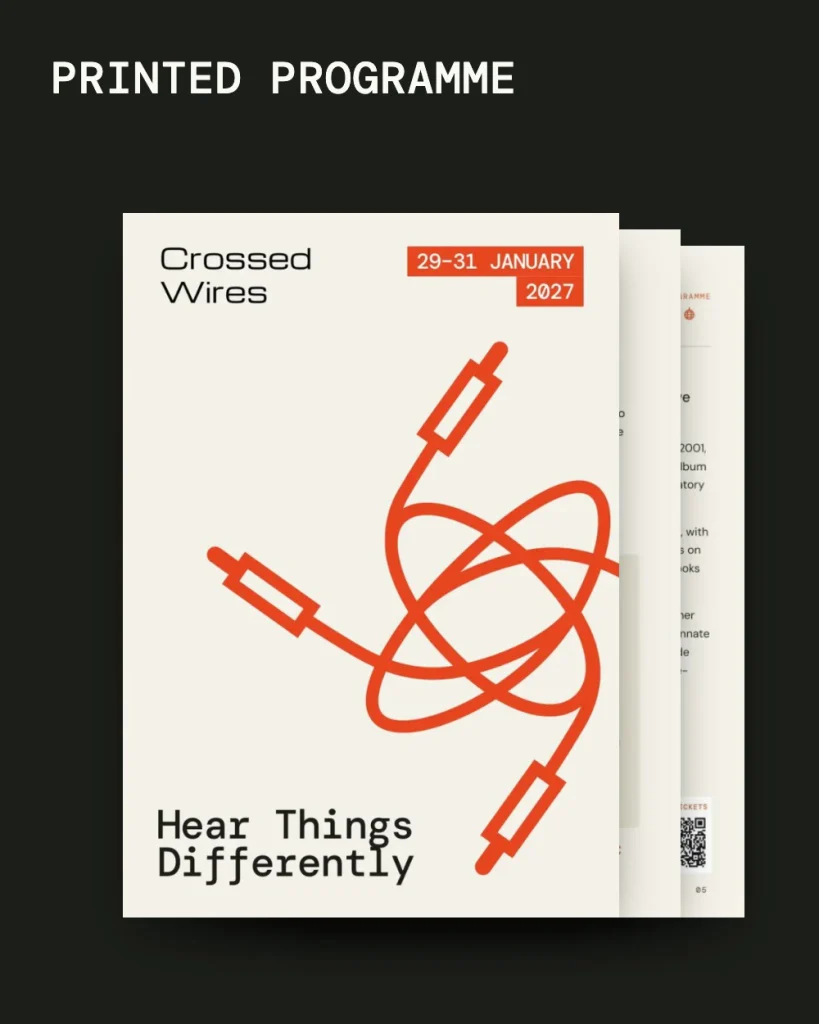
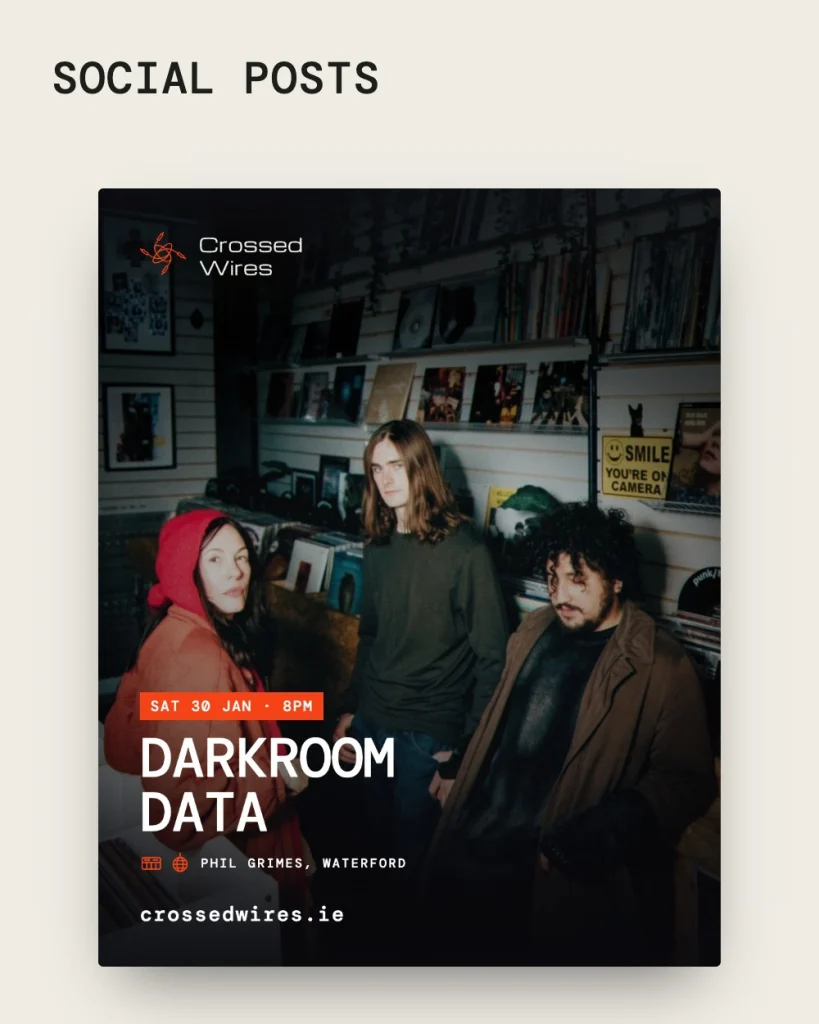
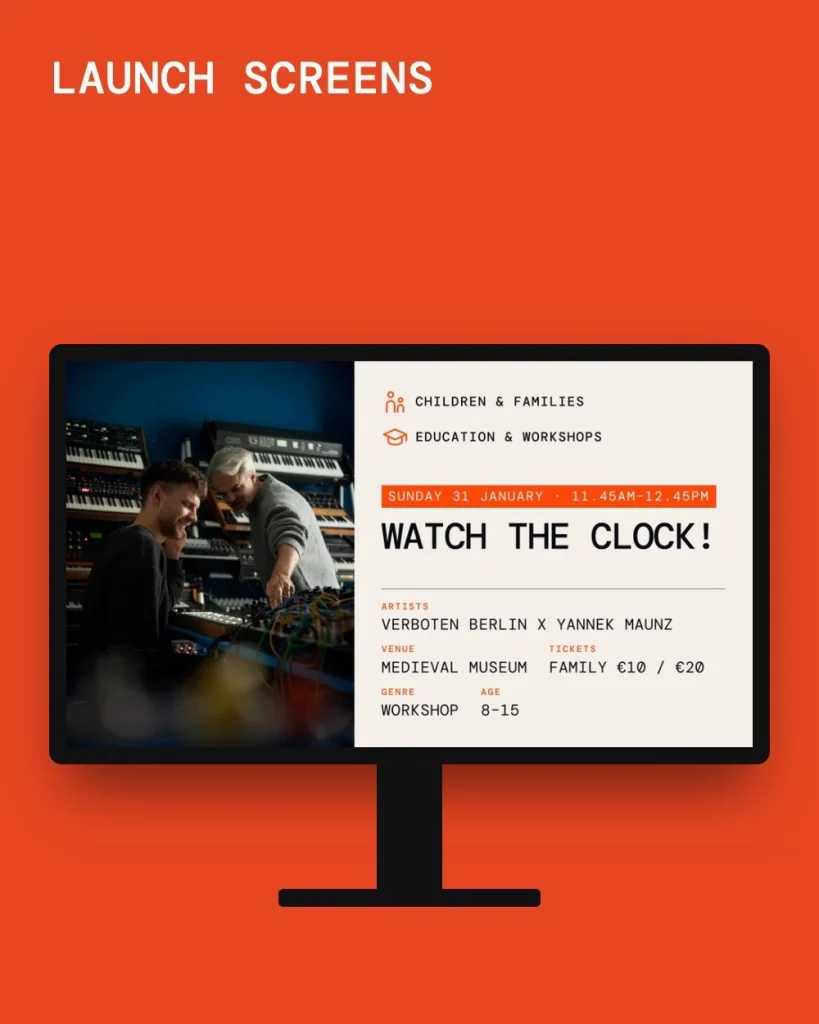
Everything we made: the website, the printed programme, the social posts and the launch-night screens.
The brief
Every year the same things need making: a website, a printed programme, ticket listings, posters and social posts, all from the same programme, which keeps changing up to the last minute.
We wanted a way of working where the team only had to put the information in once, and everything else could be made from it quickly.
One shared brain
We used AI to plan a Google Drive folder for everything the festival needs: events, artists, venues, logos, photos and copy. The team dropped their documents in, and that folder became the single source of truth.
We then pointed Claude at it. Claude reads the folder and builds from it, so a change in Drive can flow through to the website and the brochure without anyone retyping it. It also set up all the Eventbrite listings from the Drive files. We just checked that everything was there and working.
Before building anything, we also set up a style guide for the AI: the festival’s colours, fonts, logos, tone of voice and layout rules. We’ve found that when you give AI everything it needs up front, it builds faster and drifts far less into its own style. Every time we learned something new, we added it to the guide, so it became the reference Claude went back to for every piece.
Finding the look
We ran mood board sessions with Niall and the Crossed Wires team: what they liked, what caught their eye on other festival sites, and what didn’t feel right. We ran all of that through AI, picked out what worked and settled on a colour scheme to start from.
The style didn’t stop at the mood board. It kept developing while we built, because AI let us try ideas quickly and see them working straight away.
Part one: the website
This isn’t a typical WordPress site. The homepage is a wall of event flyers you can drag and look around. Click a flyer and it opens full screen with no jump between pages, and when you close it, it settles back onto the wall.
Three ways to browse. The flyer wall, a “Crate” view that flicks through the events like a DJ going through records, and a plain timetable. They all switch smoothly into each other.
Search that comes to you. Type and the matching events fly onto the screen. You can also filter by day.
Everything on the event page. Time and date, the venue with directions from where you are, and tickets bought on the page through Eventbrite, so people never have to leave the site.
Easy to share. Every event can be shared to the main social platforms.
Artists you can hear. Each artist has a profile with their music from their own channels, plus Spotify, Apple Music, Bandcamp and more.
A hidden instrument. Click an empty spot on the wall and you hear a sound and get asked if you’d like to play. It’s a small Easter egg for curious visitors, and it started life on the “coming soon” page.
Opening the finale: the venue map with directions, then the artists’ music, played right on the page.
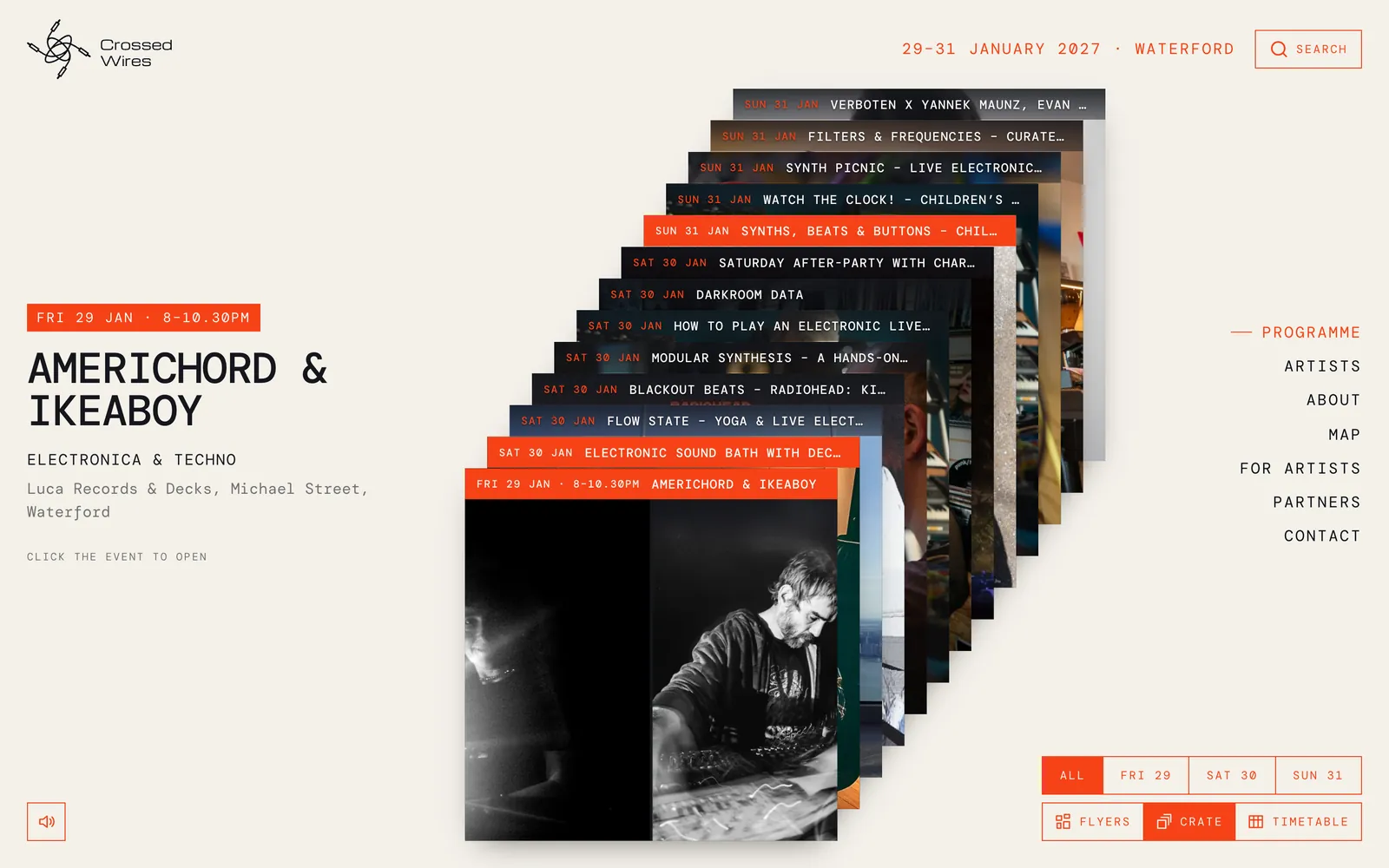
The Crate view: the events stacked like records, in festival order.
Flyers
Crate
Timetable
The same three views on a phone.
Part two: the brochure
The printed programme is a 24-page A5 booklet with a page for every event. We built it from the same Drive as the website, so the dates, times, venues and artist details always matched.
The team could log in, comment on any section, and we had Claude make the changes. It took about three rounds of edits from first draft to sign-off, with very little manual work on our side.
Claude can make a print PDF, but we weren’t confident it would get every print detail right the way a proper design program does. So once the brochure was signed off, we had Claude rebuild all 24 pages in InDesign. It took about an hour, and gave us a real InDesign file set up to the printer’s spec, which we checked by eye, having worked in InDesign for years, before it went to print.
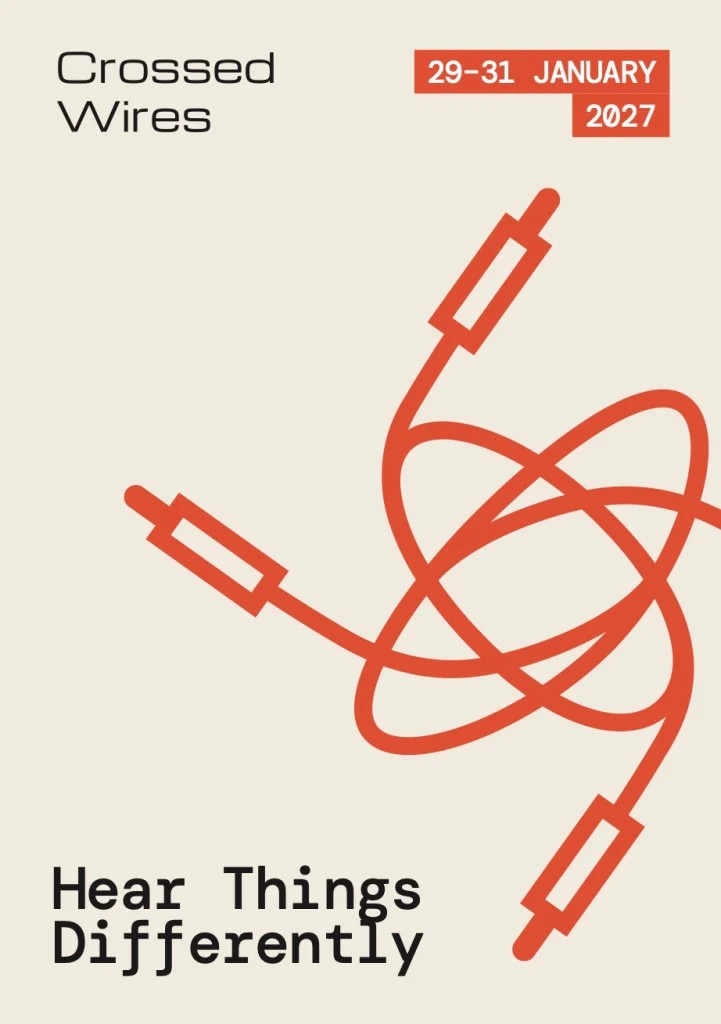
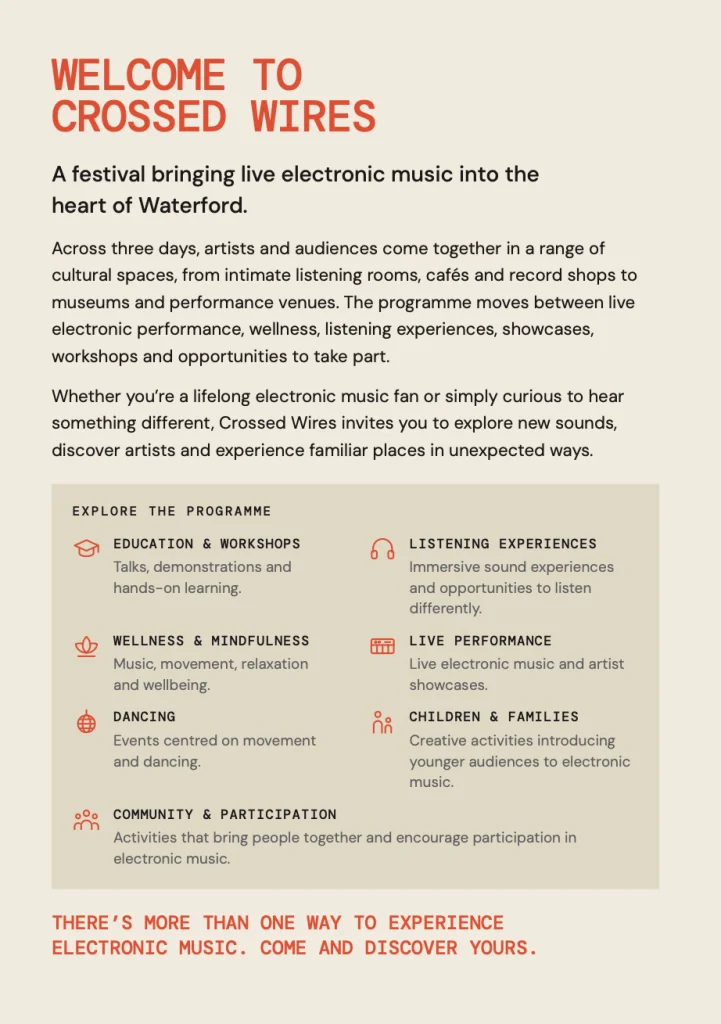
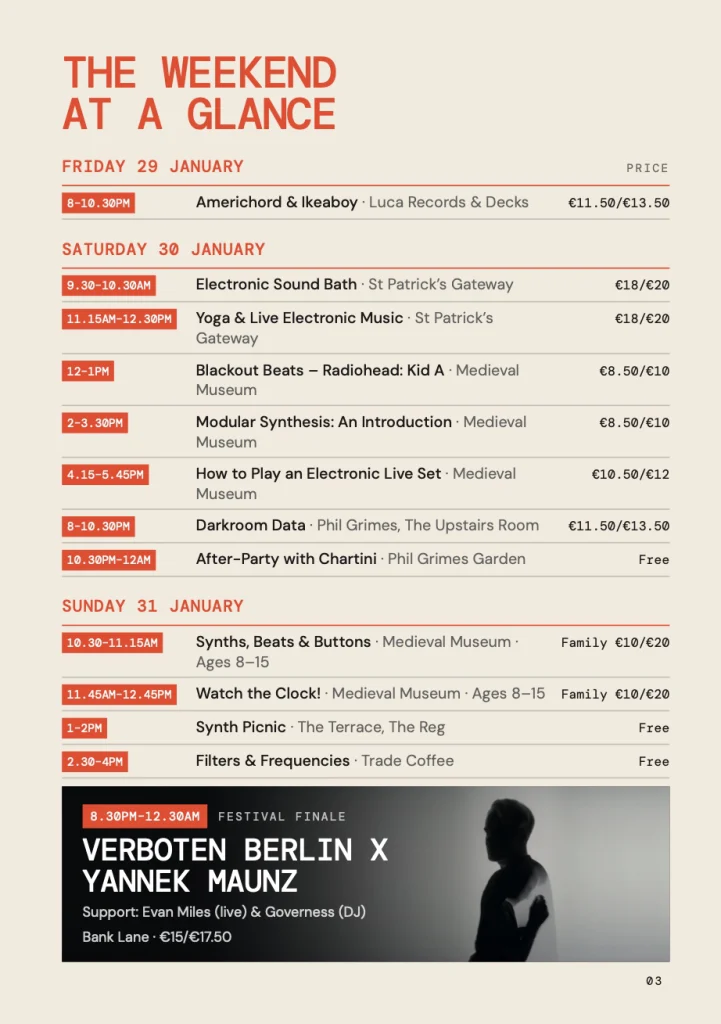
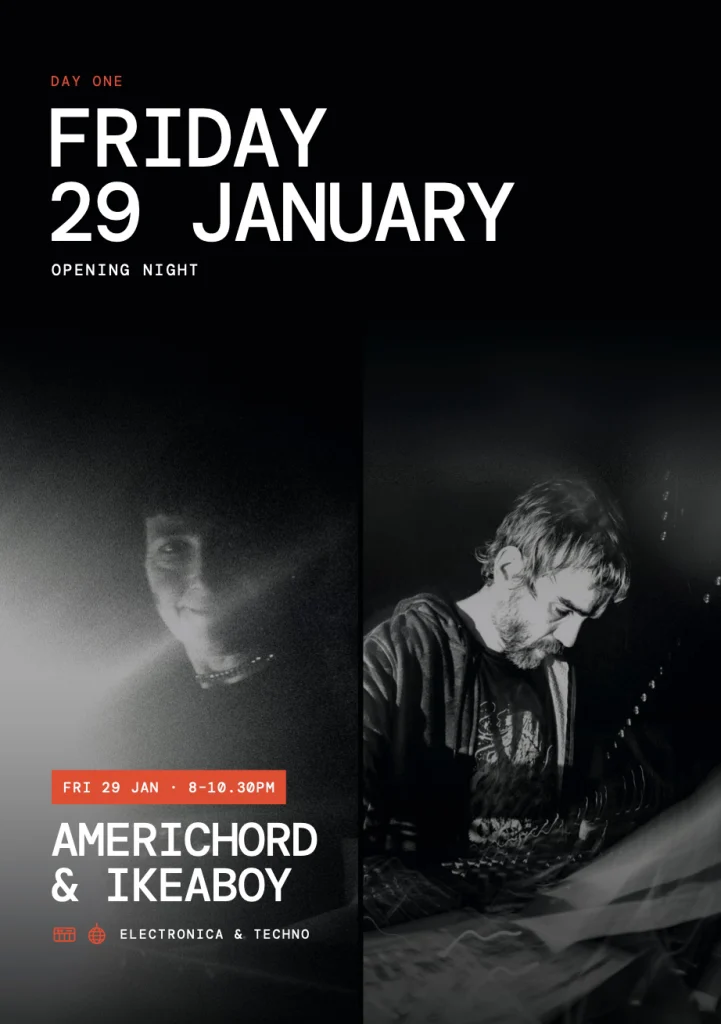
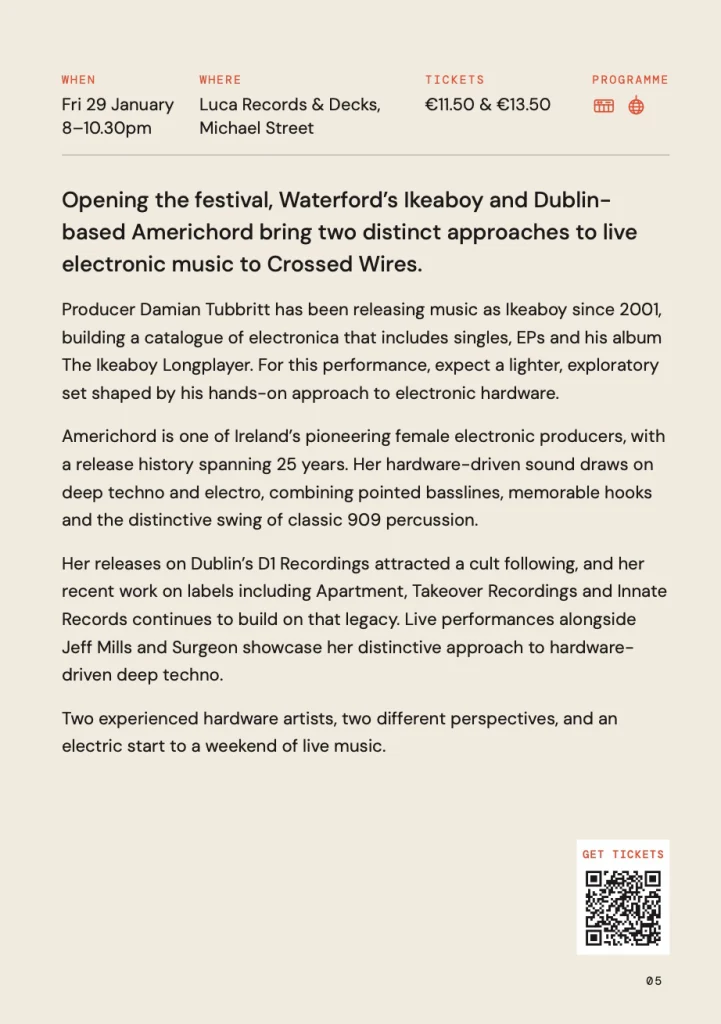
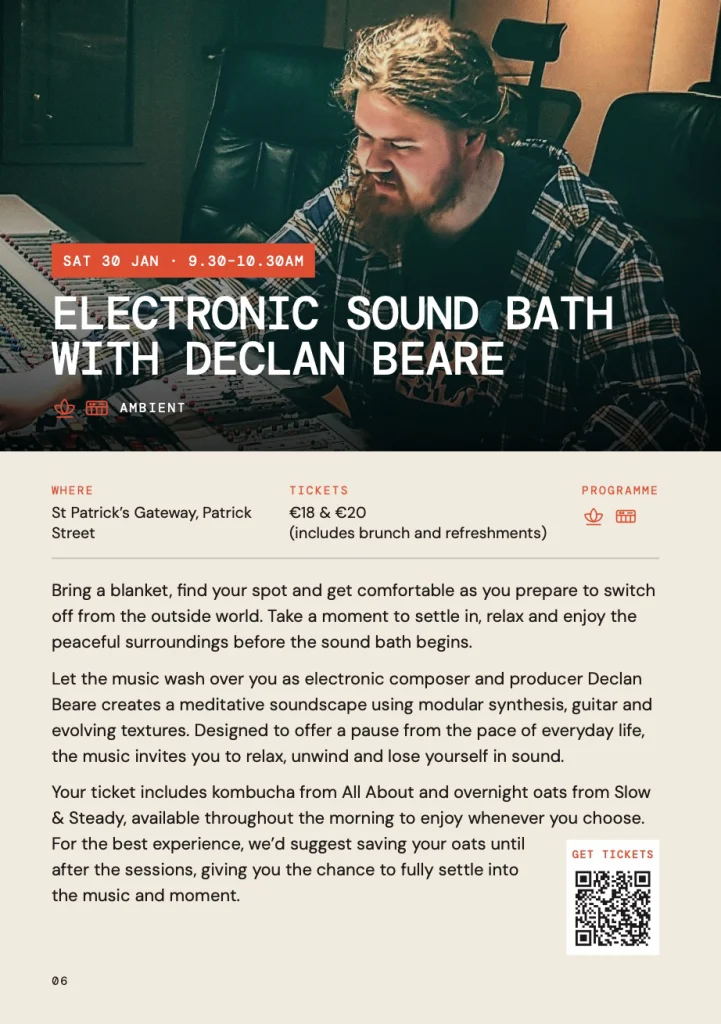
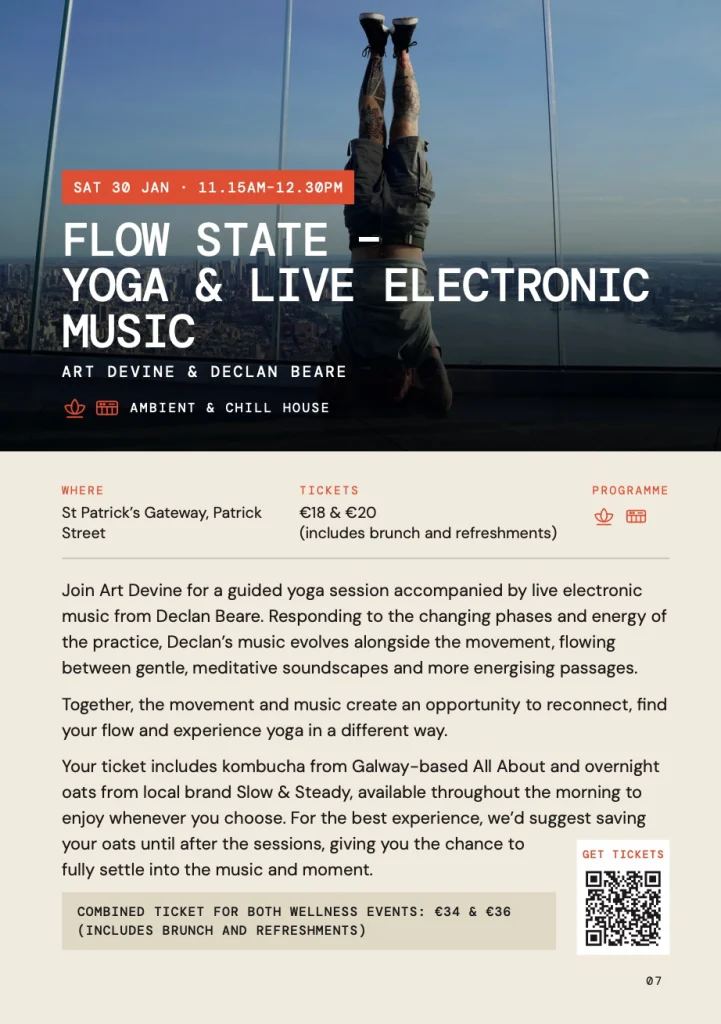
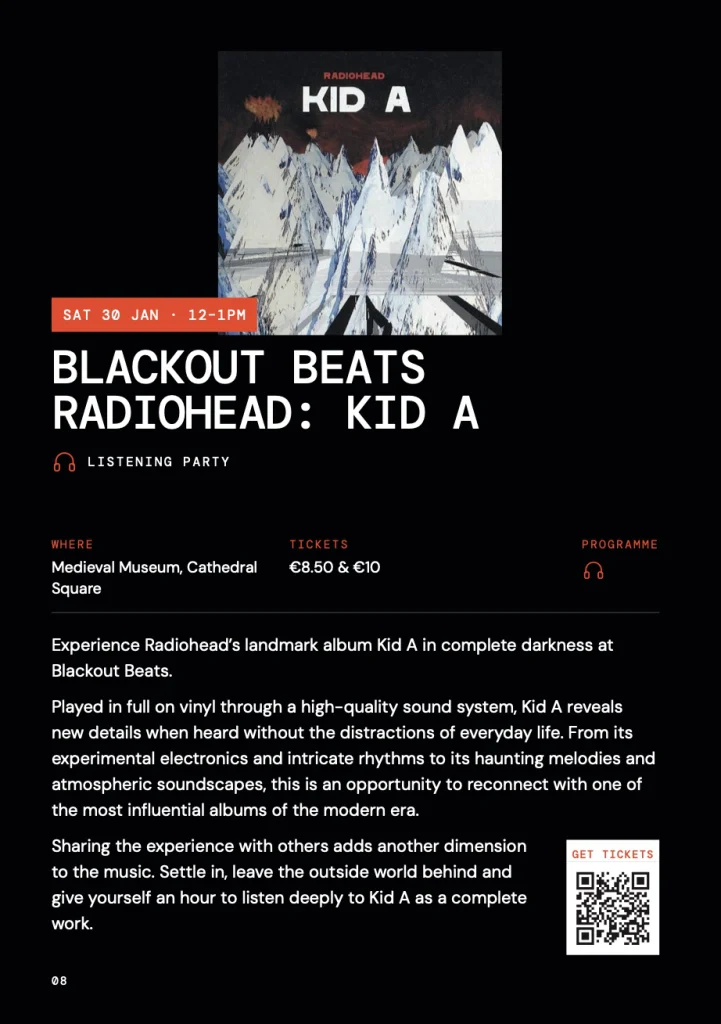
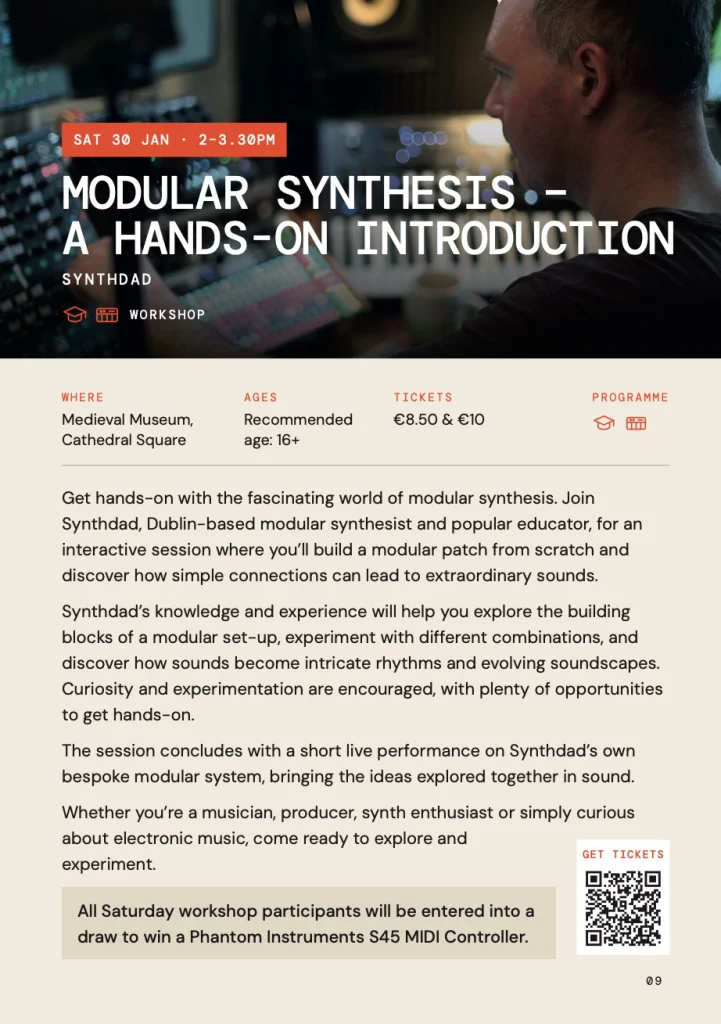
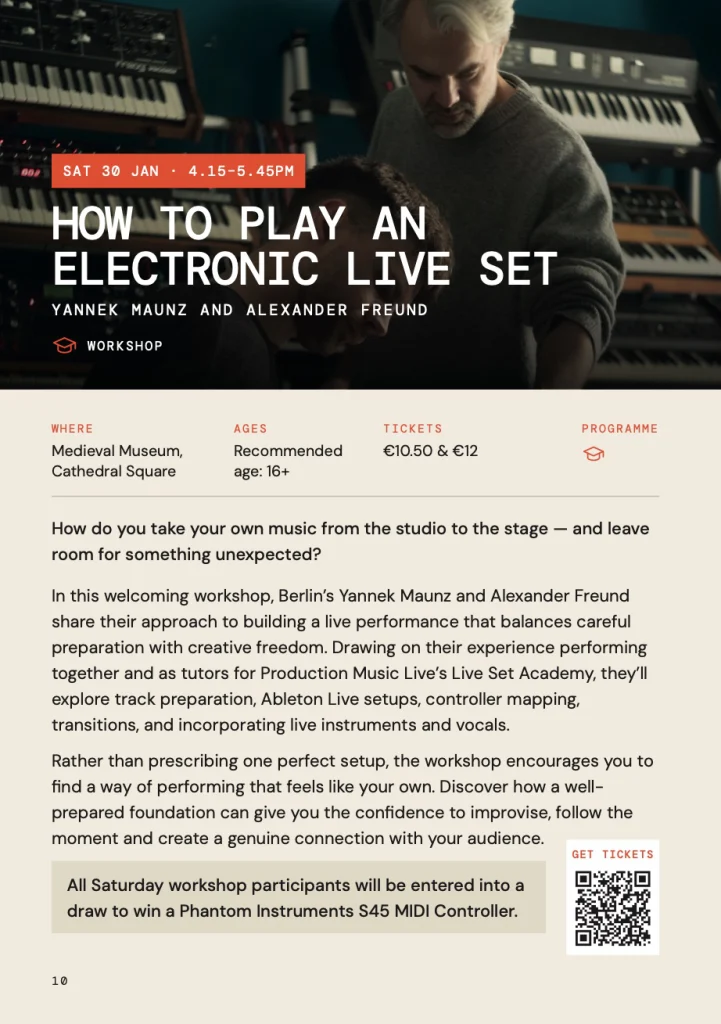
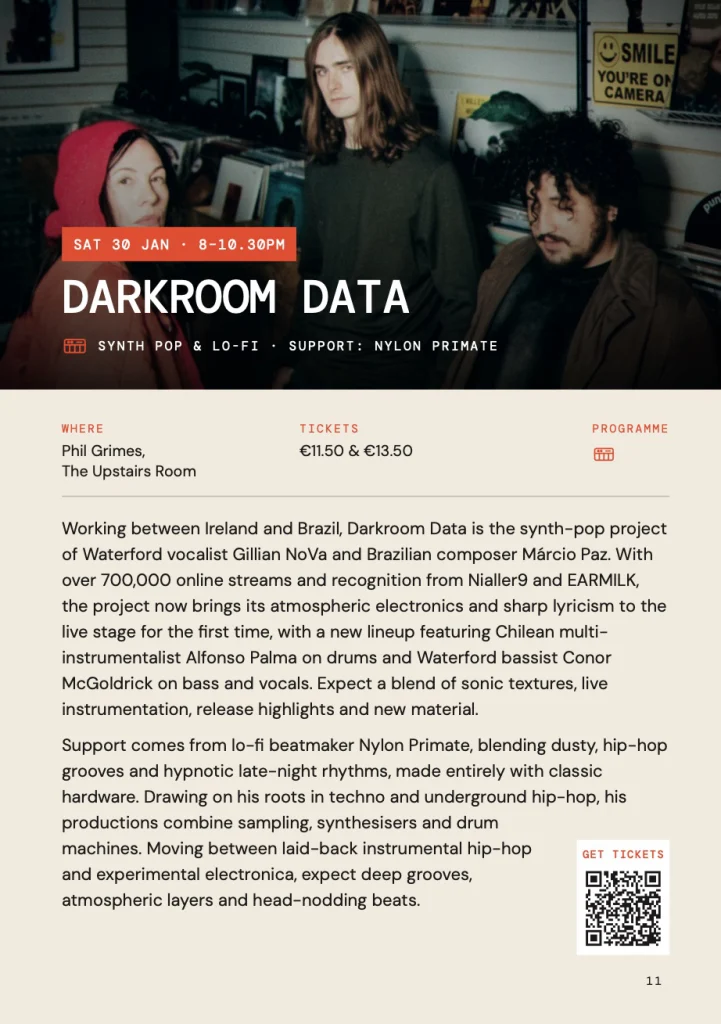
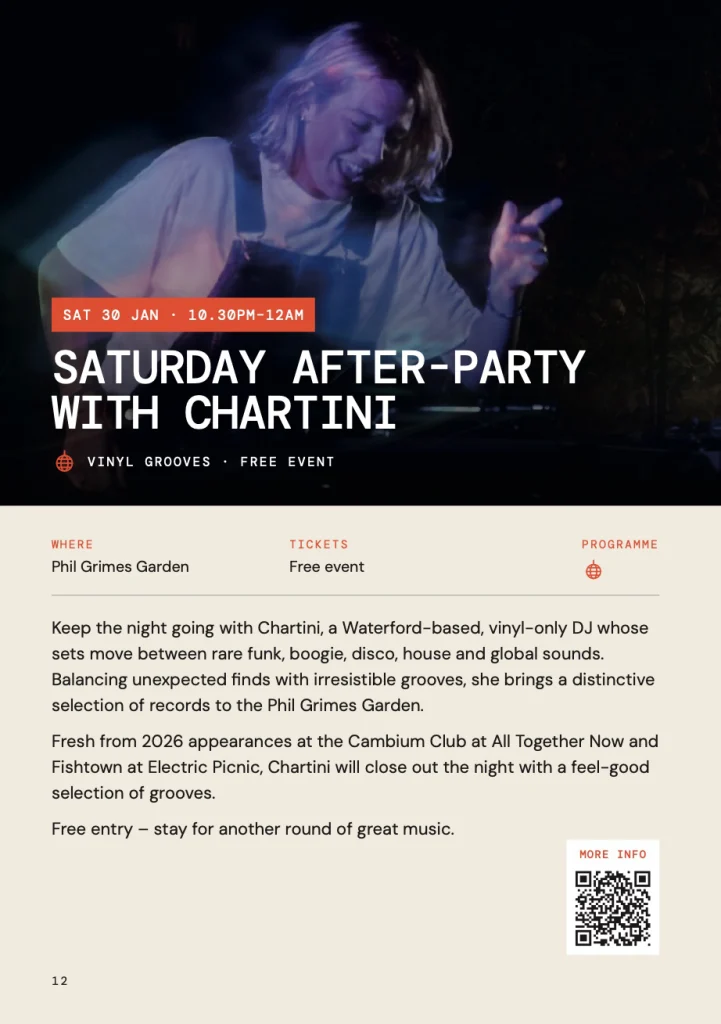
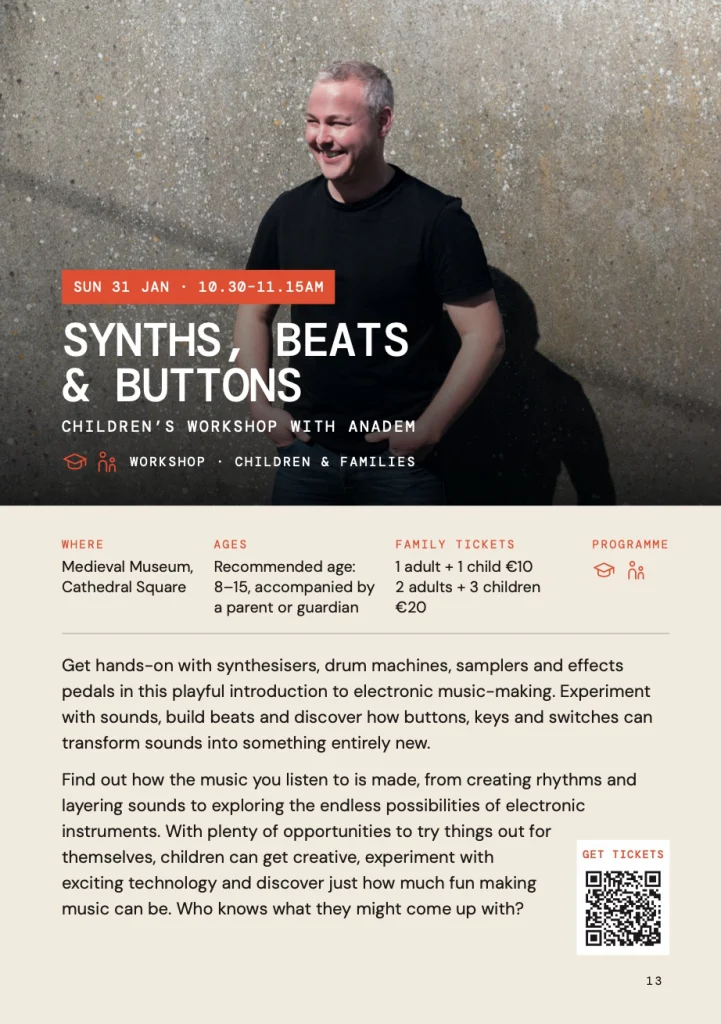
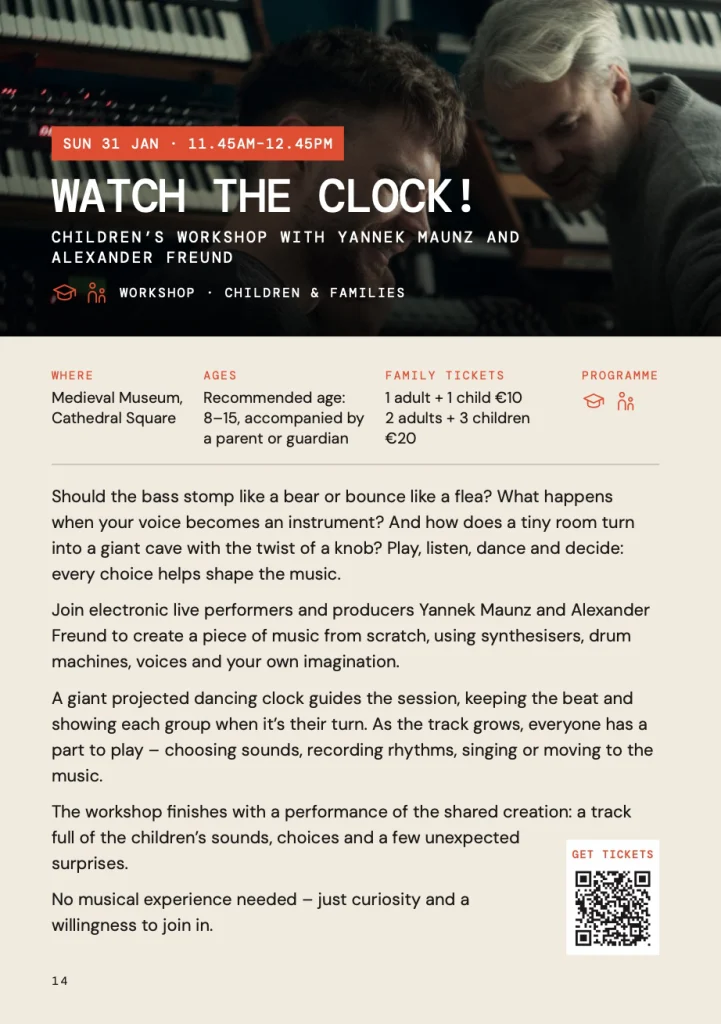
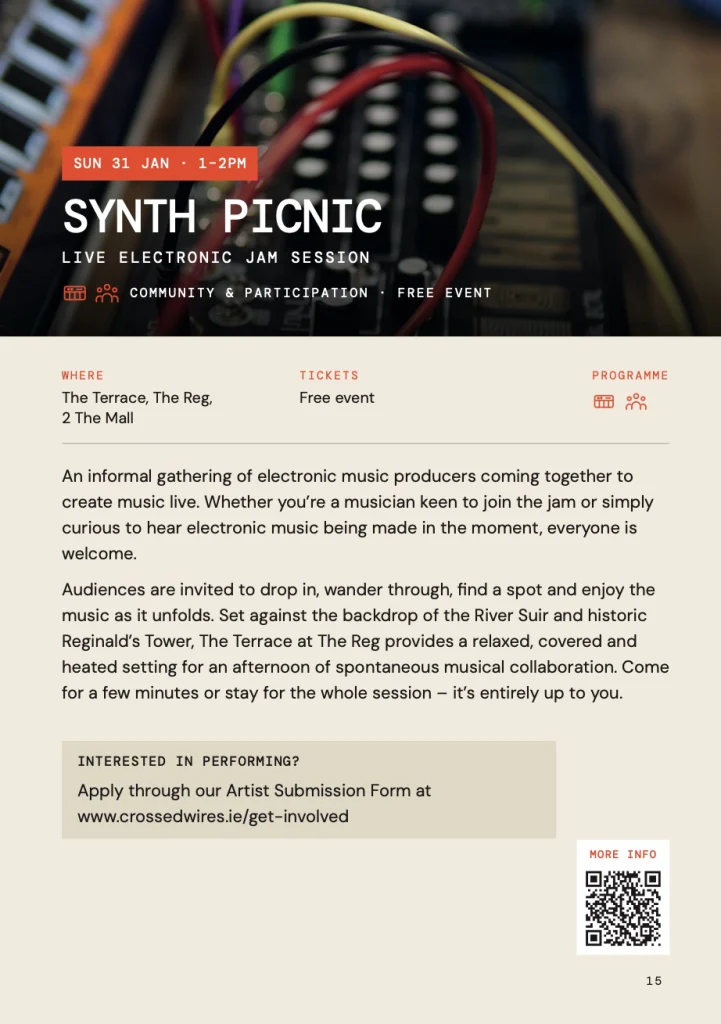
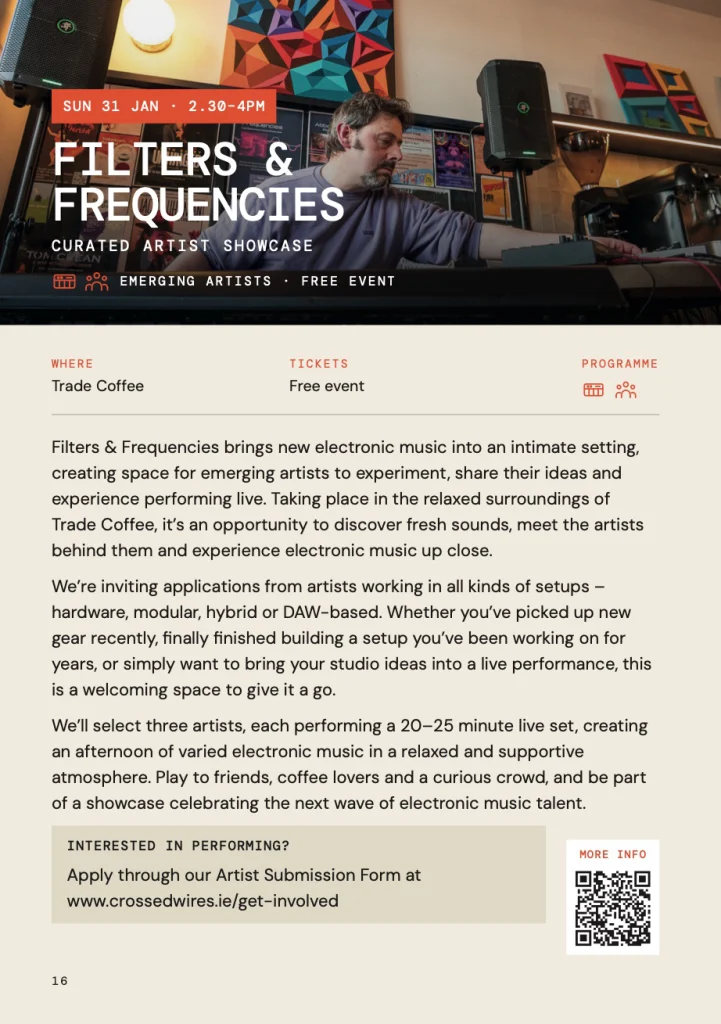
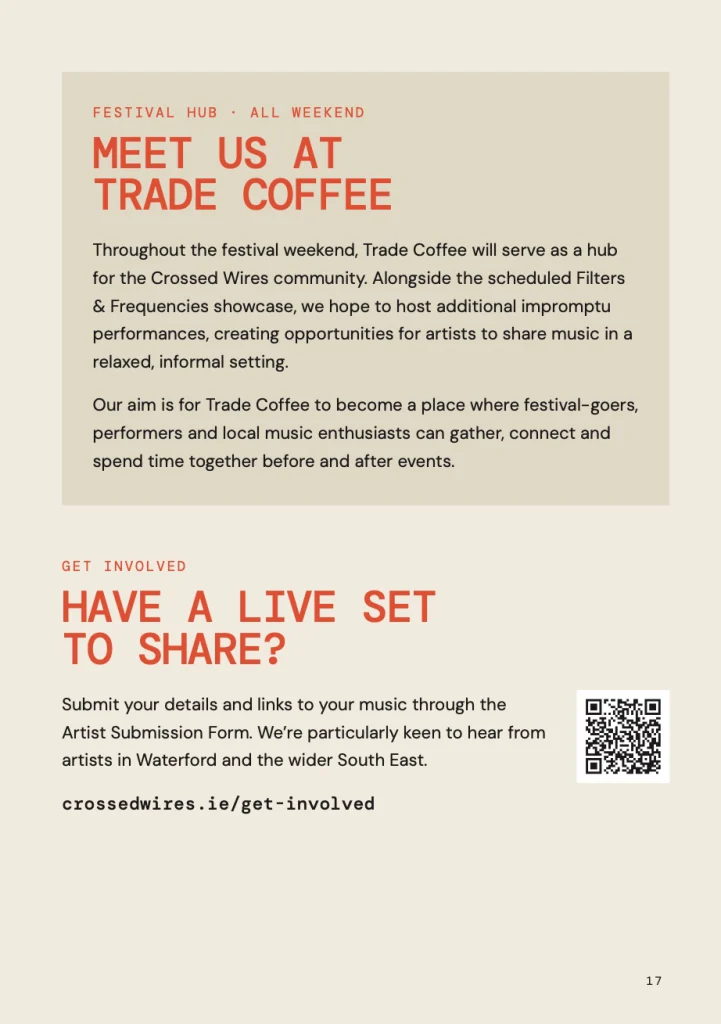
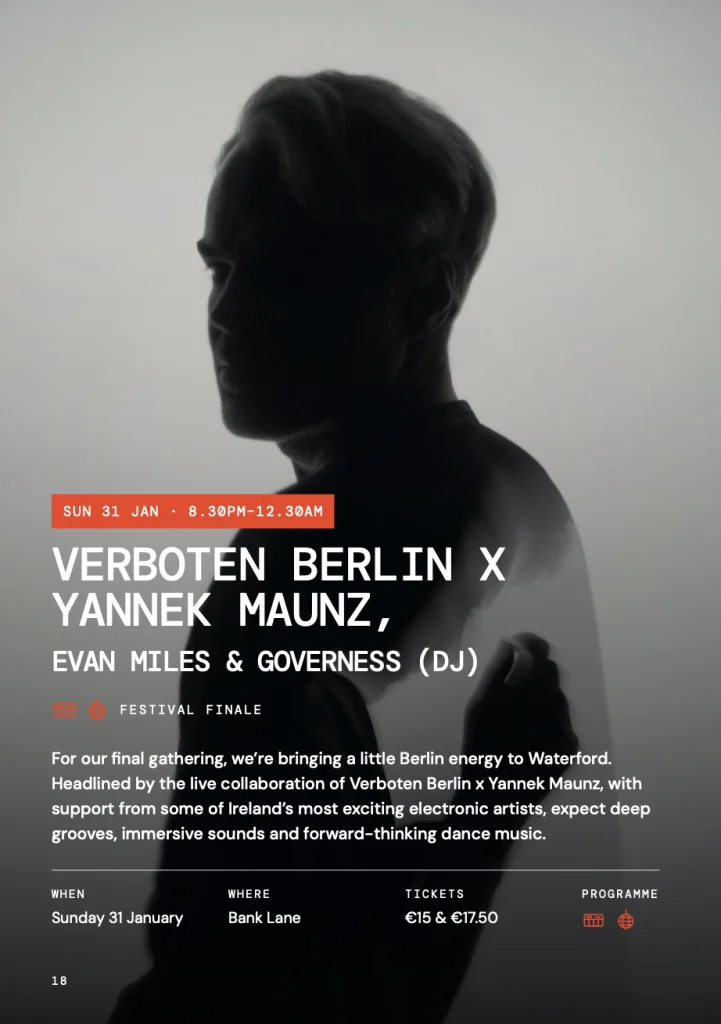
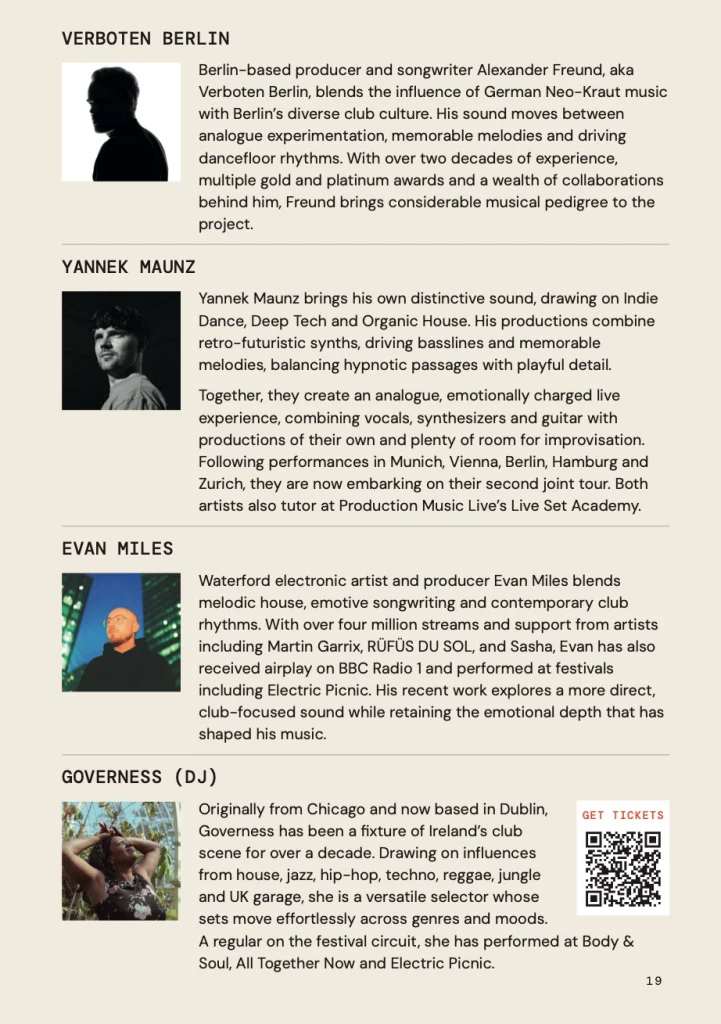
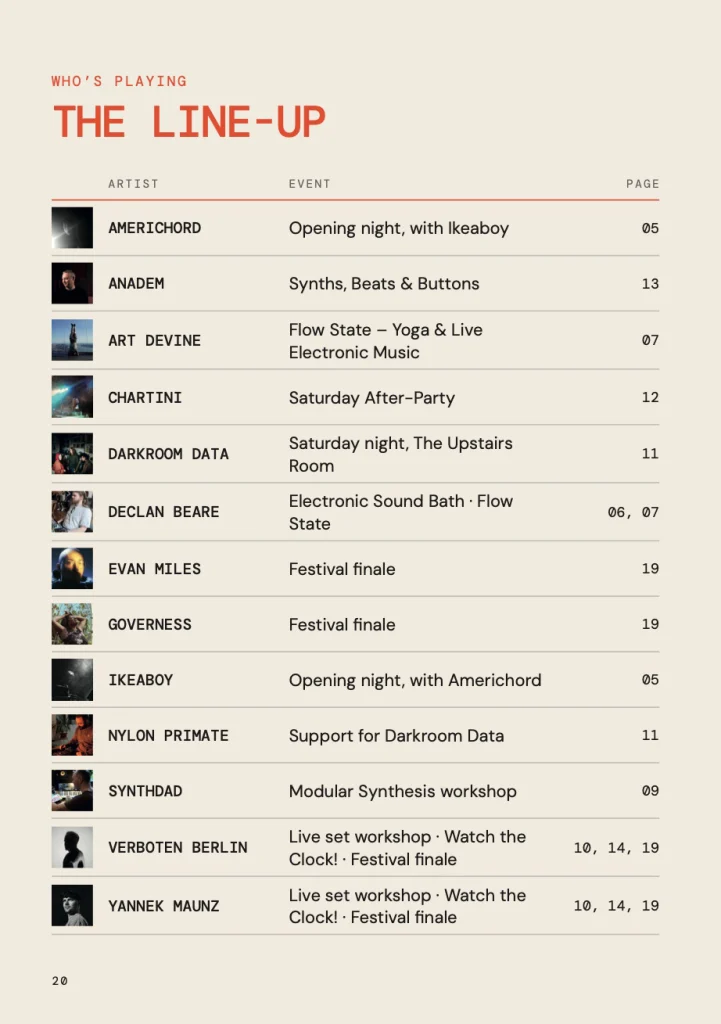
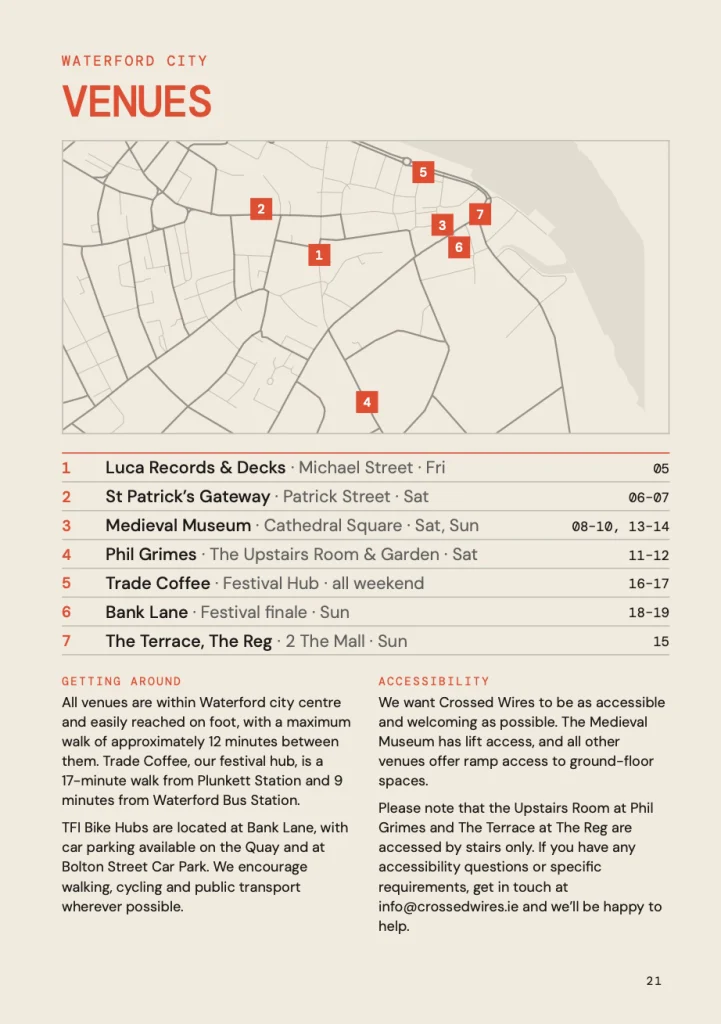
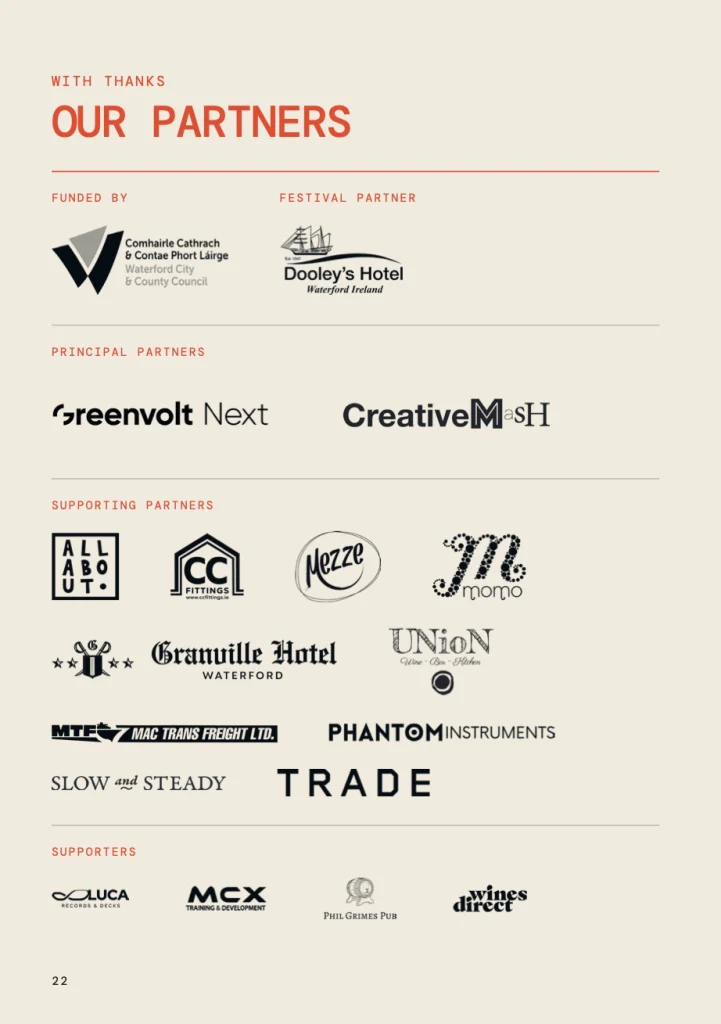
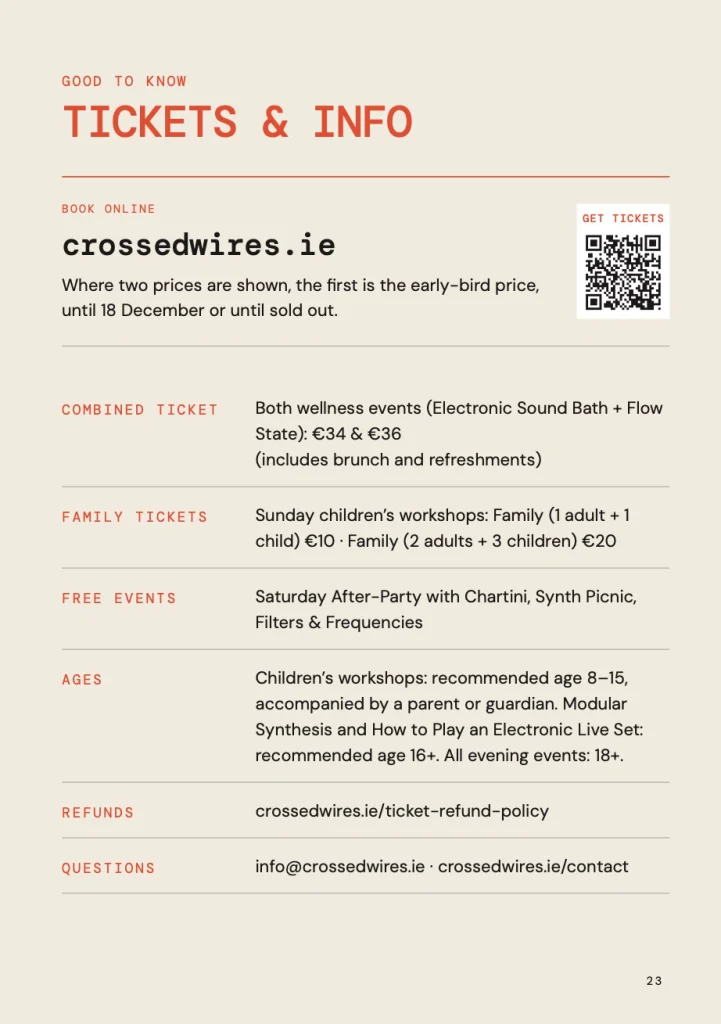
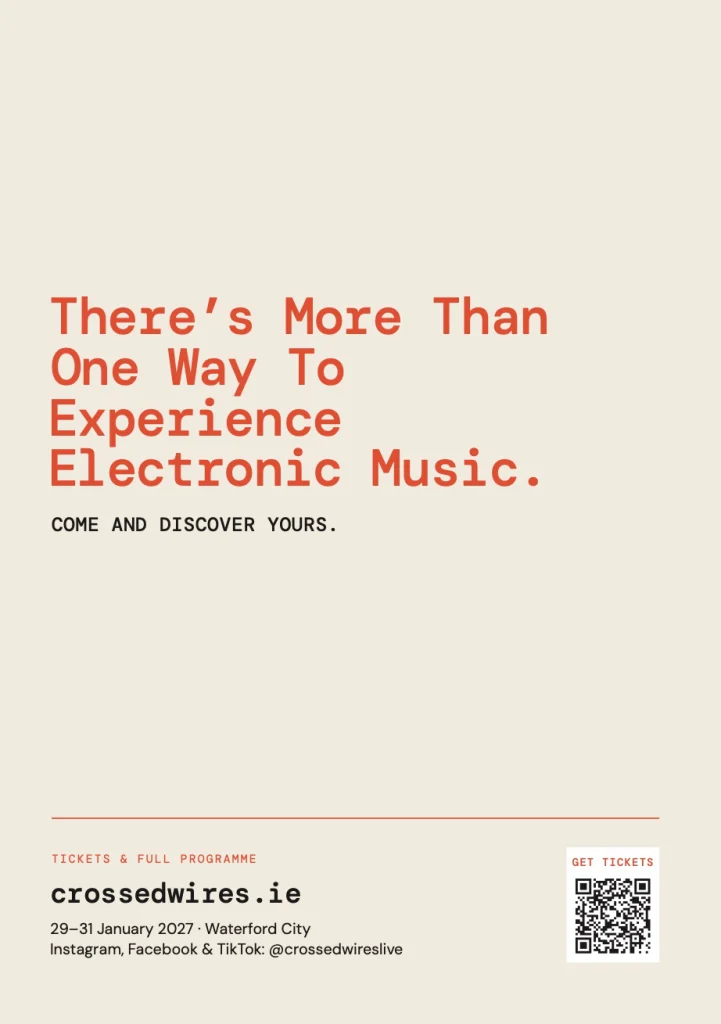
Click through the finished brochure. Each event page has its own QR code, made by the website.
How the two came together
We designed the website and the brochure side by side, and each one shaped the other. A new icon on the website went straight into the brochure, and a layout that worked in print came back into the website. Because both were built from the same Drive, they stayed in step.
The QR codes tie them together. We built a QR code generator and tracking system into the website itself, so the team can create, update and change codes whenever they need to, and see how often each one is scanned. There’s no outside QR service, so no paywall and no limits on codes or stats. Claude made a code for each event straight from the site and placed it in the brochure, so every printed page links to the right event.
The site also counts what matters for future funding applications: QR scans, events viewed, ticket clicks and orders. It never stores IP addresses or personal data. Visitors choose whether to accept cookies, and Google Analytics only runs if they say yes.
Part three: launch night
Crossed Wires launched the 2027 programme with a night at Trade Coffee in Waterford, and we made the screens for it.
The big screen showed a slow-moving wall of every event’s poster. One at a time, each poster came forward with the event details: the day, time, venue, artists and ticket price.
We didn’t make the video ourselves. We gave Claude one instruction: make it look like the website and go through the events one by one. It built the whole video from the same Drive and website as everything else, so every poster and time matched, and we didn’t have to edit a single frame.
The launch-night screen: the poster wall, then each event up close.
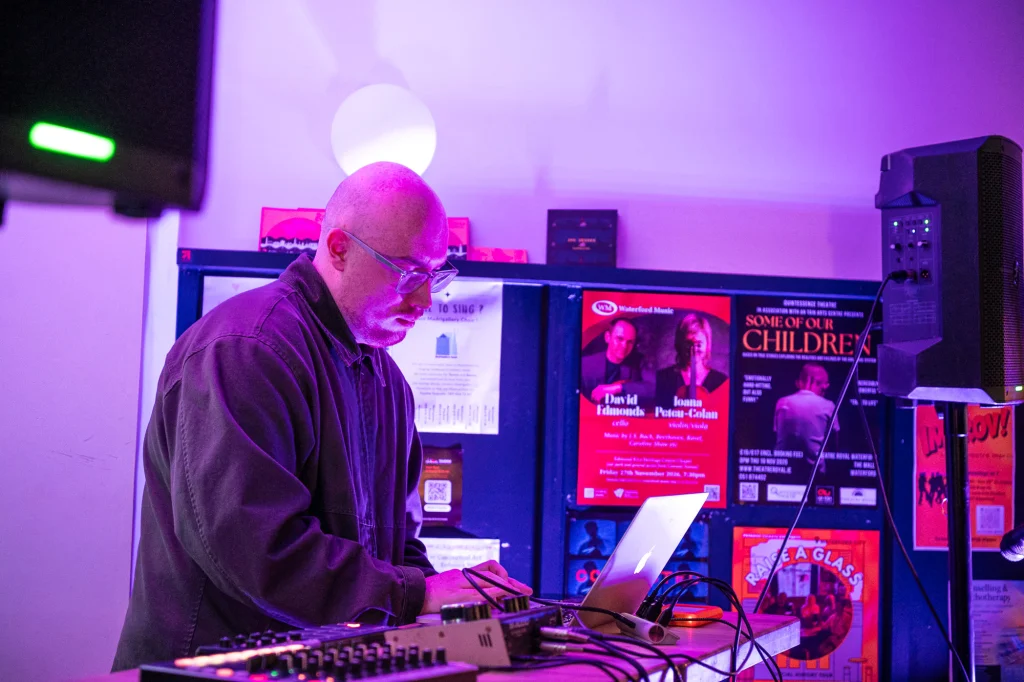
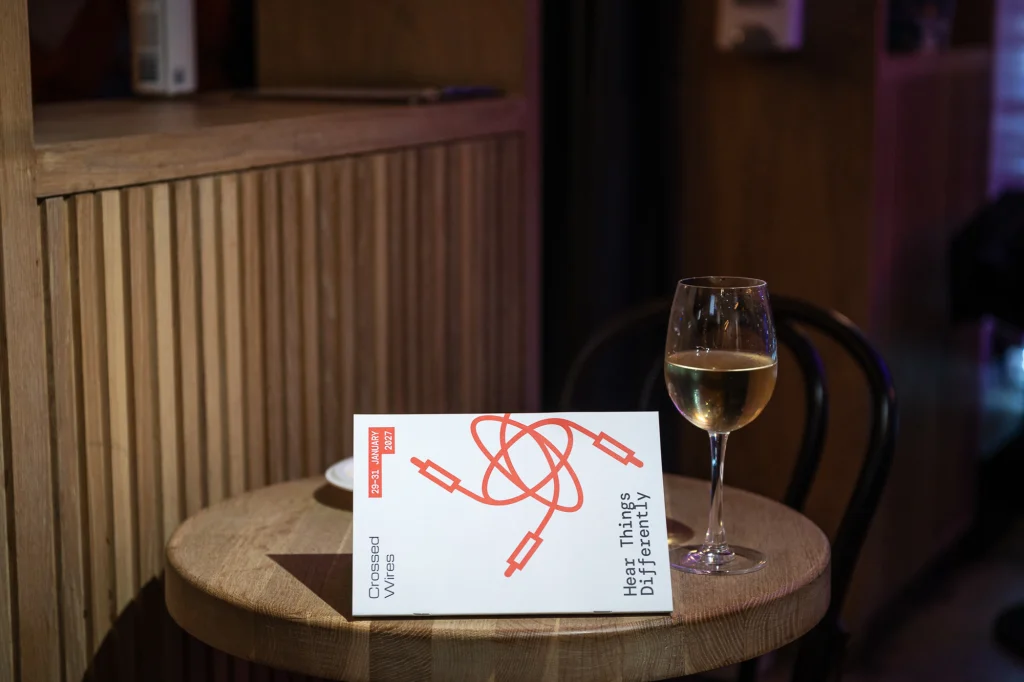
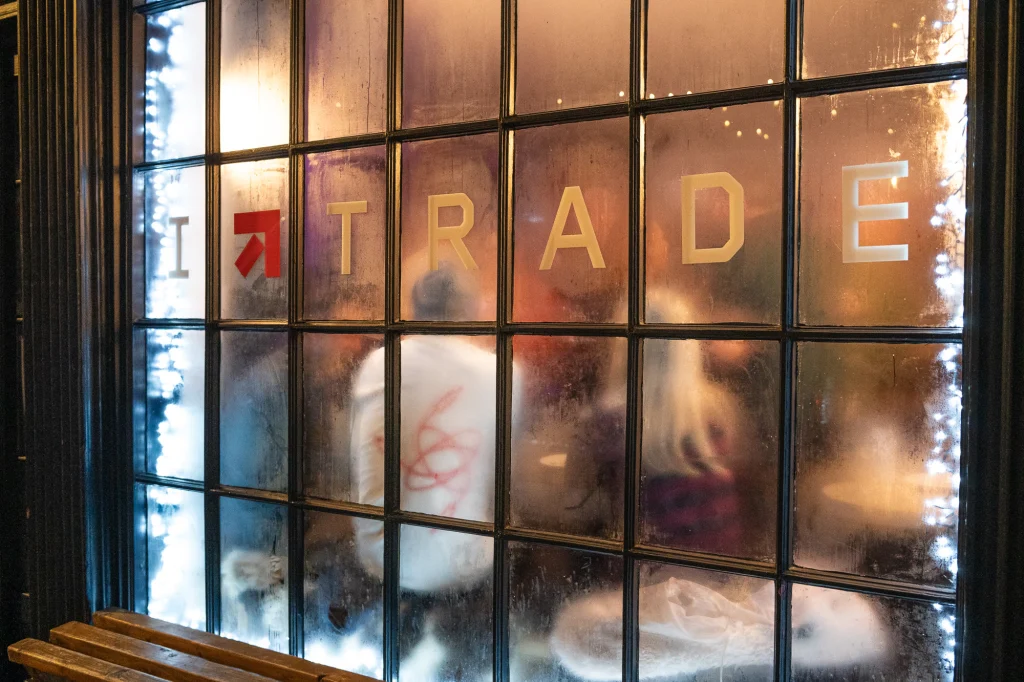
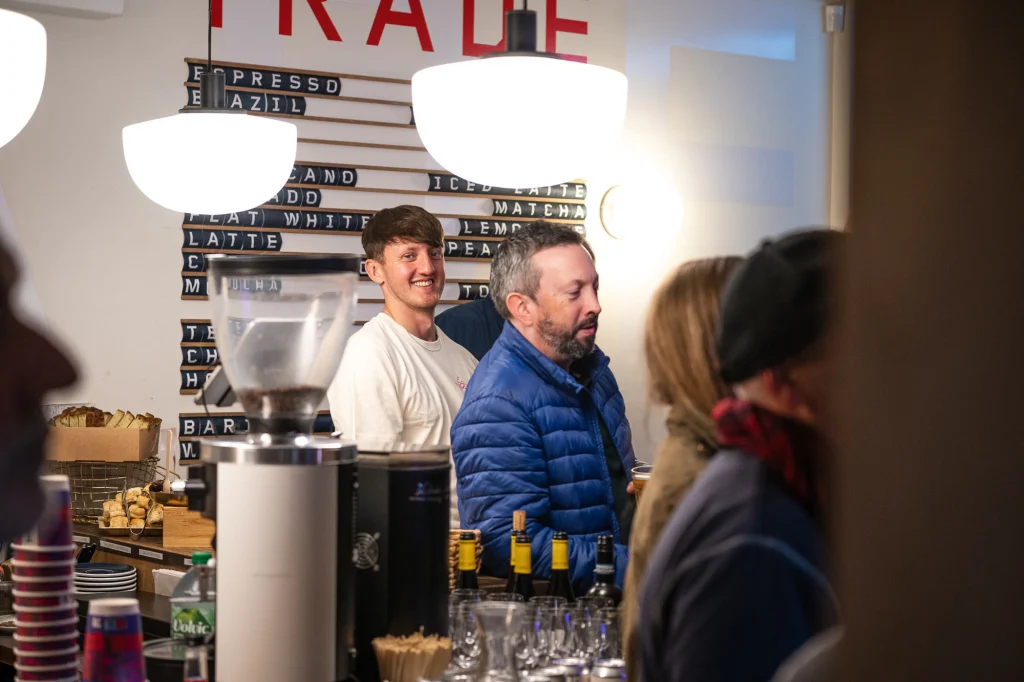
Launch night at Trade Coffee.
Part four: the brain keeps working
The Drive we set up for the website didn’t stop at the website. Claude now uses it, along with everything else the festival has, to keep making what the team needs from week to week.
Goes in
- Google Driveevents, artists, venues, copy
- Video libraryfootage from past festivals
- The organiserstheir ideas, and what they need now
- The websiteQR scans and button presses
- Google Analyticswho visits, and from where
- Eventbriteticket sales
Comes out
- Websitealways up to date
- Ticket pageson Eventbrite
- QR codeson brochures and screens
- Printed programmeready for print
- Social postsstill and animated
- Launch-night screensevery event, up close
- Weekly reportwhat’s happening, what to try
AI as a service for Crossed Wires. The team puts the information in once, and Claude makes what’s needed.
Social posts
Claude makes the festival’s social posts: still images, and short animated versions for stories and reels. It pulls from our library of photos and video from past events, and from whatever Niall sends in on the day, then lays it all out in the festival’s style.
Over the launch weekend that meant a post for every step: the teaser, “tonight”, the programme going live, a highlight for each headline act, and a thank you at the end.
Three of the animated posts, as they played on Instagram.
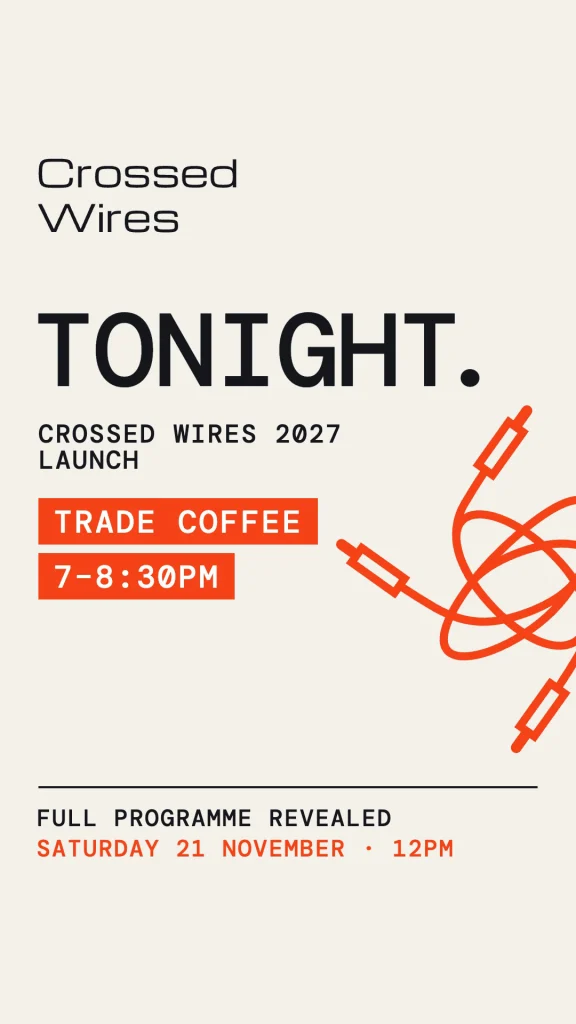
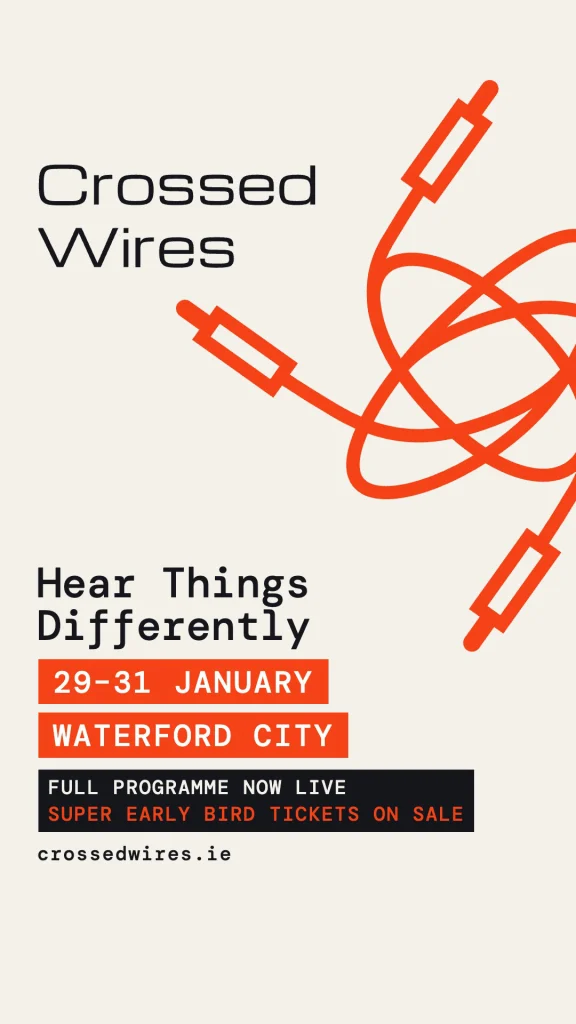
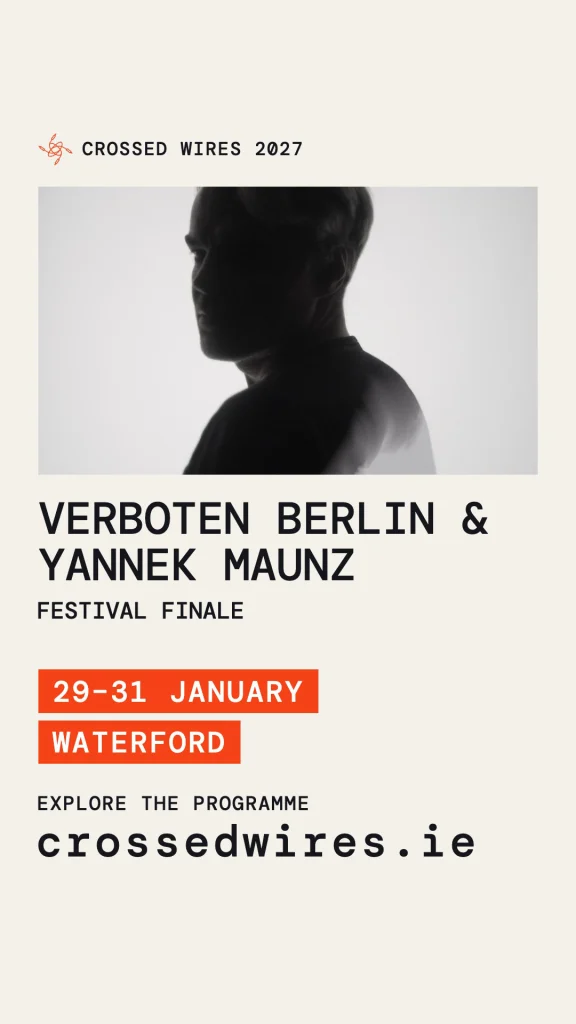
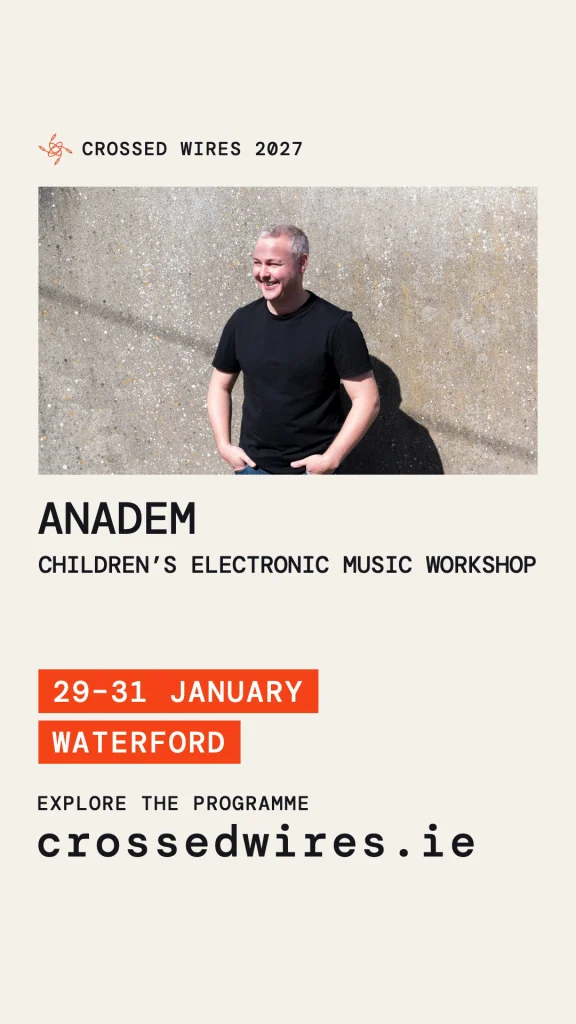
Still posts from the launch weekend.
A report every week
Every week Claude also writes a report. It looks at the website, including the QR scans and button presses the site counts, Google Analytics and the Eventbrite pages, and puts it together in plain English: what’s working, and what to try next.
It knows the calendar too. Writing at the end of November, it pointed out that Black Friday was that Friday, and suggested starting Christmas gift posts there and running them up to Christmas.
- Claude reads the site, Analytics and Eventbrite
- Writes it up in plain English
- Suggests what to try
- The team picks what to do
Weekly report
Monday morning · written by Claude
What’s working
Selling-out news gets people moving.
Parents are sharing the kids’ workshops in their WhatsApp groups.
People who find the site on Google stay and read.
Coming up
Black Friday, this Friday.
Posters and brochures go out around town.
The Early Bird deadline, 18 December.
Ideas for this week
- Black Friday is this Friday. Start Christmas gift posts now and run them up to Christmas: the workshops and the sound bath make good presents.
Count down to the Early Bird deadline, with a post a week before, two days before and on the day.
Give parents a ready-to-send message and image for their WhatsApp groups.
Ask every artist to share their own event link.
A shortened version of a weekly report, with the figures left out.
The result
In under 10 days, Crossed Wires got a new website, a printed programme, ticket sales on their own site, and a system the team can keep using. Since then the same system has made the launch-night screens, the social posts and a report every week. Our job became curating and fine-tuning, rather than building every piece by hand. This is what we offer now: AI as a service. We set AI up around how a team already works, then build simple tools on top so anyone on the team can use it.
Quote from Niall to come.